
Scottish MSP Discovers AI's Power and Limitations in RMM


1-50
Employees
1,000
Managed Seats
Summary
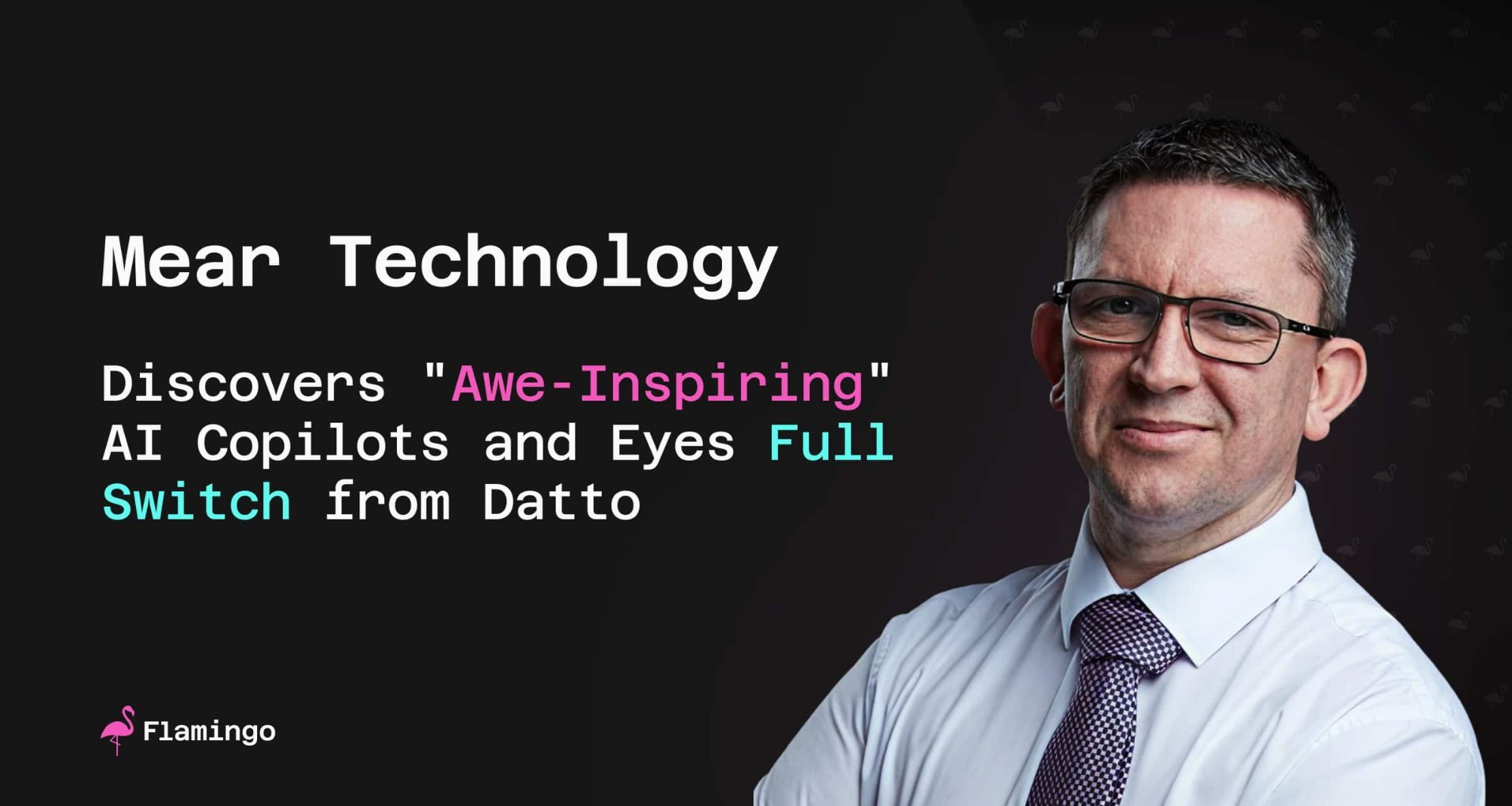
Stephen Mears is the founder of Mears Technology, a Scotland-based MSP established in 2011 that manages 1,000 endpoints and 1,500 users across small and medium businesses in central Scotland and beyond. With a team of five technicians and nearly a decade and a half of hands-on RMM experience, Stephen is not an easy person to impress. He evaluates the major platforms regularly like Datto, ConnectWise, Ninja, and others, and in all that time has never once found a reason to switch. That changed when he started testing OpenFrame. The AI resolved complex technical problems in seconds that would have taken his team a week to work through manually. For the first time in 14 years, Stephen is actively considering a full platform migration, and his feedback is shaping exactly what that path looks like.
Challenge
Mears Technology had long since outgrown what off-the-shelf RMM platforms were built to offer. Stephen and his team had spent years developing custom automation workflows, a homegrown PSA, and hundreds of scripts to compensate for the gaps that every major vendor left open. The core problem wasn't any one platform — it was a market-wide blind spot. Every major RMM focuses heavily on technical feature parity while ignoring the proactive maintenance and sales intelligence that would actually make MSPs more profitable. MSPs sit on enormous amounts of endpoint data — operating system versions, hardware age, software installed, device specifications — but have no native tools to turn that data into upsell opportunities, automated client reporting, or lifecycle planning. Stephen had built his own solution to this using N8N workflows that scraped APIs, generated HTML reports for decision-makers, and flagged machines approaching end of life — all because no vendor had bothered to build it natively. The status quo wasn't just frustrating. It was leaving money on the table for every MSP in the market.
Solution
OpenFrame's AI capabilities cut through immediately. Tasks that would sit in Datto's job queue for five to ten minutes — sometimes longer, ran instantly. Complex diagnostics that would have required a technician to spend hours digging through logs, running scripts manually, and troubleshooting results were resolved in a single prompt. Stephen described the experience as awe-inspiring, specifically calling out fixes that his team would have spent a week working through. What stood out most was the ability to action fleet-wide operations without connecting to individual machines, simply describing the problem and letting the AI go find and fix it across the entire estate. Beyond raw speed, Stephen recognised something more significant in OpenFrame's approach: the potential to use AI not just as a reactive tool, but as a way to build permanent automated fixes that run on their own. The vision he outlined — AI diagnoses the problem once, creates the script, and schedules it to run indefinitely without human intervention — is precisely the direction OpenFrame is building toward.
Results
Stephen Mears sits in a rare category: a technically sophisticated, 14-year Datto veteran who is genuinely ready to switch. His evaluation of OpenFrame has been one of the most detailed and substantive in the beta program, and his feedback has directly informed the platform's near-term development priorities. UDFs at device, site, and global level, advanced filtering and data visualisation, brandable Fae, and smarter AI-to-automation handoffs are all areas where his input has added clarity and urgency to the roadmap. Beyond the product specifics, Stephen brought a broader industry perspective that is increasingly relevant to how OpenFrame positions itself. As AI reduces headcounts across every sector — fewer users, fewer devices, fewer endpoints to bill against — the MSPs that survive and grow will be the ones who build their value around outcomes rather than volume. Per-device and per-user pricing, he argued, is a model with a shelf life. OpenFrame, built around AI efficiency and automation from the ground up, is already aligned with where the industry is heading. Stephen sees that clearly — and is watching the platform close the remaining gaps with a migration plan in mind.
